Our Times

Synopsis: Two married physicists in Mexico City invent a time machine and travel from 1966 to 2025. Original title in Spanish: Nuestro Tiempo
Would you leave all you know and everyone you know to live in another time? The answer is yes for Nora and Héctor, two physicists living in 1966 Mexico City. The university professors have been building a time machine.
Nora experiences sexual discrimination at work. Our Times is a fantastical tale so the most that Nora endures is not being taking seriously. When she orders supplies, it’s her husband who gets the delivery. And she only gets to teach one class. There’s no harassment or coordinated undermining based on gender. But we get the idea that her professional prospects are dim compared to the men’s. At least their time travel machine work is shared equally.
Nora and Héctor are running out of time; the wormhole that they plan to use as a time travel portal will close soon. Most people, me included, have more notions about time travel from the 1985 movie Back to the Future than from Albert Einstein’s early 1900’s theories of relativity. Both Doc Brown from BTTF and Einstein have elucidated the public on tachyons, hypothetical particles that travel faster than the speed of light. If you could travel faster than the speed of light, you could speed into the future.
Nora and Héctor have time to hobnob with one of Nora’s women students who wants to be her assistant — good luck getting funding for that, Nora– and Nora’s niece who just got engaged. But then it’s back to the lab.
Their time machine looks about as sturdy as the motorized kiddie rides at shopping malls. This is not a Christopher Nolan movie, so just go with it. The two physicists don old timey pilot hats and goggles before deciding whether to go backwards or forwards in time. Now, in spite of the ease with which Marty and Doc zip back to the past, the ability to travel back in time is theoretically less plausible than going forwards. Fortunately, this is no obstruction to writers and filmmakers.
They go for it. It doesn’t work. And the movie ends. Kidding–of course it works. They programmed a landing for 2025 and that’s where they land. Uh oh, the transducer is burned out. It’s nighttime, near the university, so they decide they will sneak around the university in hopes of finding a supply room. First, they stop into a convenience store. The Gen Z clerk doesn’t bother to look up from her phone. Because, of course. They marvel at newspaper confirmation of the year–and of the flavored condoms for sale. Something that men could get only with a doctor’s prescription in the 1960’s and definitely not flavored.
To get to the university, the store clerk directs them to take the subway –something that had only been in the planning stages back in the sixties. Nora and Héctor get to the station and are confused to see everyone staring at devices (cellphones) as they walk. Nora smiles when she sees a “muerte al patriarcado” graffito. Over 50 years ago, women were socially trained to not question the status quo around gender. Arriving at the university, they’re reassured by the familiar campus layout. But how to find the transducer they need…
Mishaps and misunderstandings occur. But the storyline gets Nora and Héctor secure lodgings with a sympathetic university staff member. They get online. They peer out the apartment window at the city. They don’t ask any questions about what’s happened in the corresponding decades. I get that they need to hurry up and fix their time machine so they can return to 1966 before the wormhole closes, but–for God sakes, people walked on the moon in 1969! Not to mention the 1968 Movimiento Estudiantil (Mexican Student Movement) when protests called for civil liberties. The authoritarian government crushed citizen protests. Most notably there were state-sponsored massacres in Mexico City: Tlatelolco (’68) and Corpus Christi (’71). However…
Our Times is a comedy, so real-world violence is kept firmly off-screen. Instead, we see the professors upgrade to contemporary clothing and learn about current student life. They go to an undergraduate party and Nora sees that young women are free to hook-up with men or women without stigma. She wonders aloud that young women had to be accompanied by male chaperones for nighttime excursions in her times.
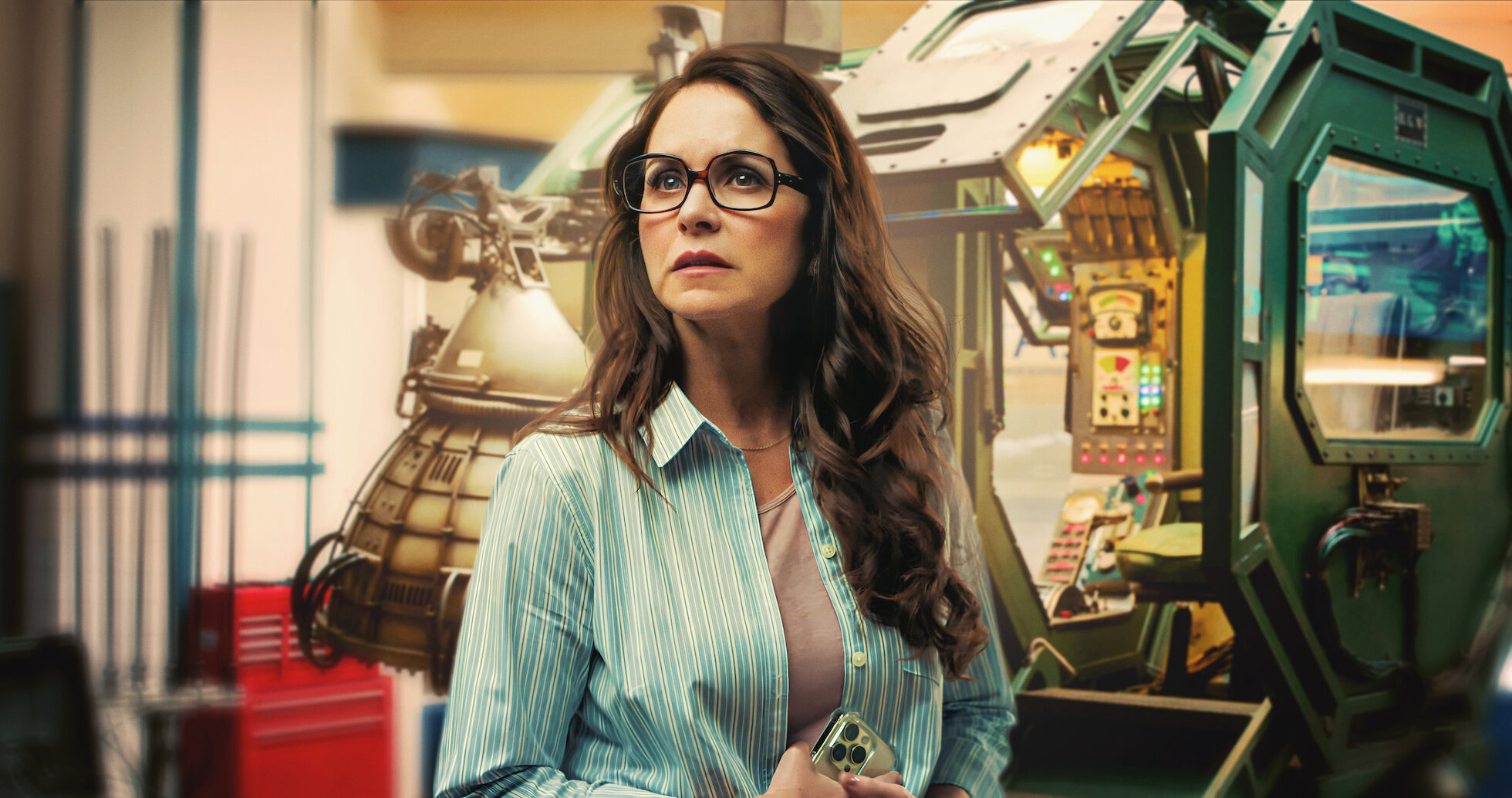
While Nora is surprised and pleased to see many more women professors and to have other physicists respect her contributions, Héctor is confused. He’s used to being the one being taking more seriously than his spouse. He isn’t sure that he approves of the gender upheavals. This is a new world where his male privilege is far less than it was in the 1960’s. It seems that even “nice guys” like their gender advantages.
The pioneering spirit that Nora and Héctor have in the beginning of the movie begins to change shape. Would you stay in a time where you are less oppressed even if it means giving up the good things and people of your time? That’s Nora’s question. But for Héctor, he needs to decide if his privilege is more important than his new life with Nora.
1966 might be better for a man, but if I were Héctor, I’d consider the medical advances since 1966. He’s not getting any younger and what if he gets, for example, Hepatitis C or erectile dysfunction in the past? There was no cure or treatment for either back then, but there is now.
As for Nora, 2025 is clearly better for women –not in Afghanistan, but Mexico, for sure. Women were forced to wait until 1953 to vote in federal elections. And now a woman–scientist Claudia Sheinbaum– is president!
Whatever Nora chooses, at least we are having a chance to see time travel from a woman’s POV instead of having to rely on the observations of Marty McFly, 1950’s white American teen 😉
Movie Loon’s Movie Review Shortcut:
Grade: C+
Cut to the Chase: Amusing, but hardly cerebral, with a good lead performance from Lucero.
Humor Highlight: The two leads trying to understand 2020’s youth culture.
 Movie Loon